




Slush 2026: What We Heard in Helsinki
Three days at Slush 2026 in Helsinki, and three themes that came back in almost every conversation: sovereignty is now a buying requirement, enterprise AI is ready to leave the pilot stage, and defence and critical infrastructure need coordination rather than more screens.
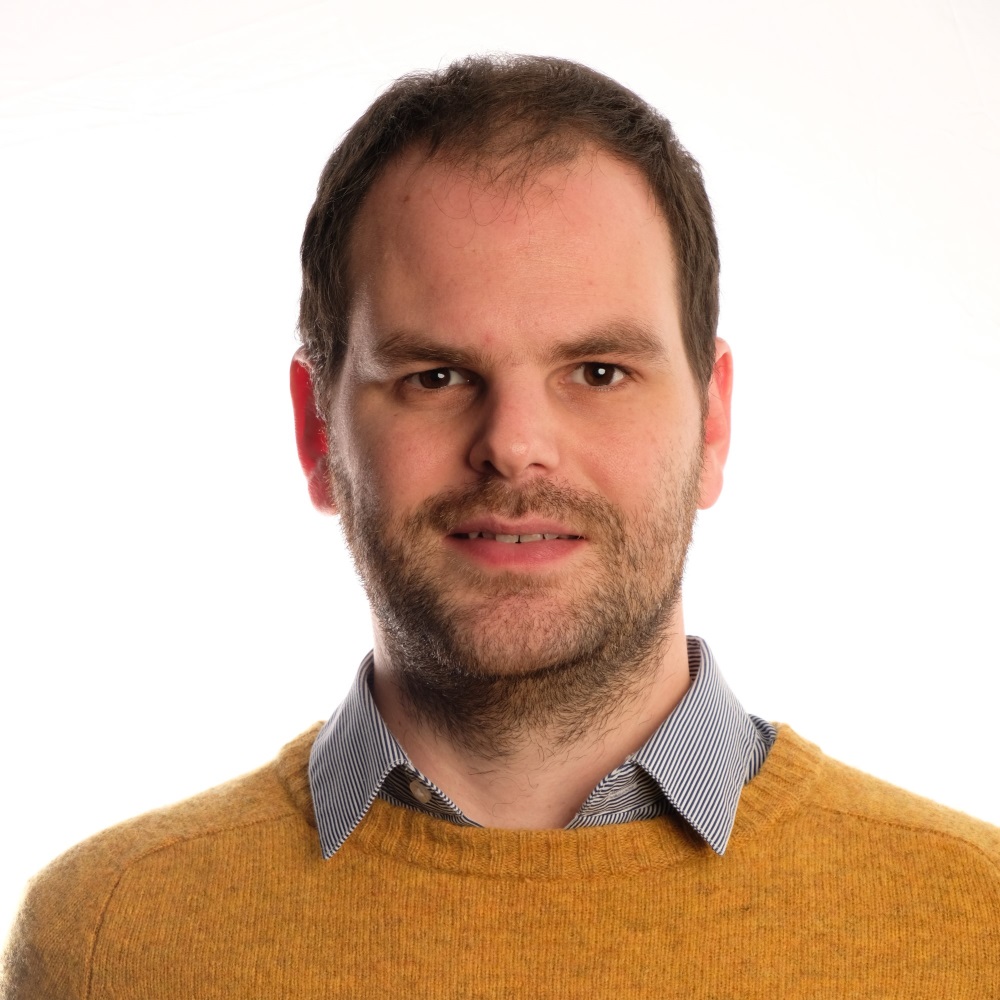

Three days of a Helsinki November, and some of the warmest conversations we have had this year. Slush 2026 brought Europe's founders, investors and buyers to Helsinki from 17 to 19 November, and Scrydon was there to listen as much as to talk.
We spoke with investors, grid operators, banks, universities, defence and government teams, sovereign cloud providers and fellow founders. Three themes came back again and again.

Sovereignty is now a requirement, not a slogan
A year ago, sovereignty was a word on a slide. At Slush 2026 it had its own sessions on the main stages, and it came up in almost every conversation with a buyer.
The question has changed. It is no longer "is your cloud in Europe?" but "who controls the stack when it matters?" Where does the AI model run? Who can change it? Does it keep working without the vendor, without the internet, after a forced update?
One session title stayed with us: "Sovereignty Starts at the Cap Table" on the Founder Stage. The title alone makes the point. Control over critical technology is not only decided where it is deployed, but also by who funds and owns the companies that build it. Sovereign AI needs European builders with European backing.
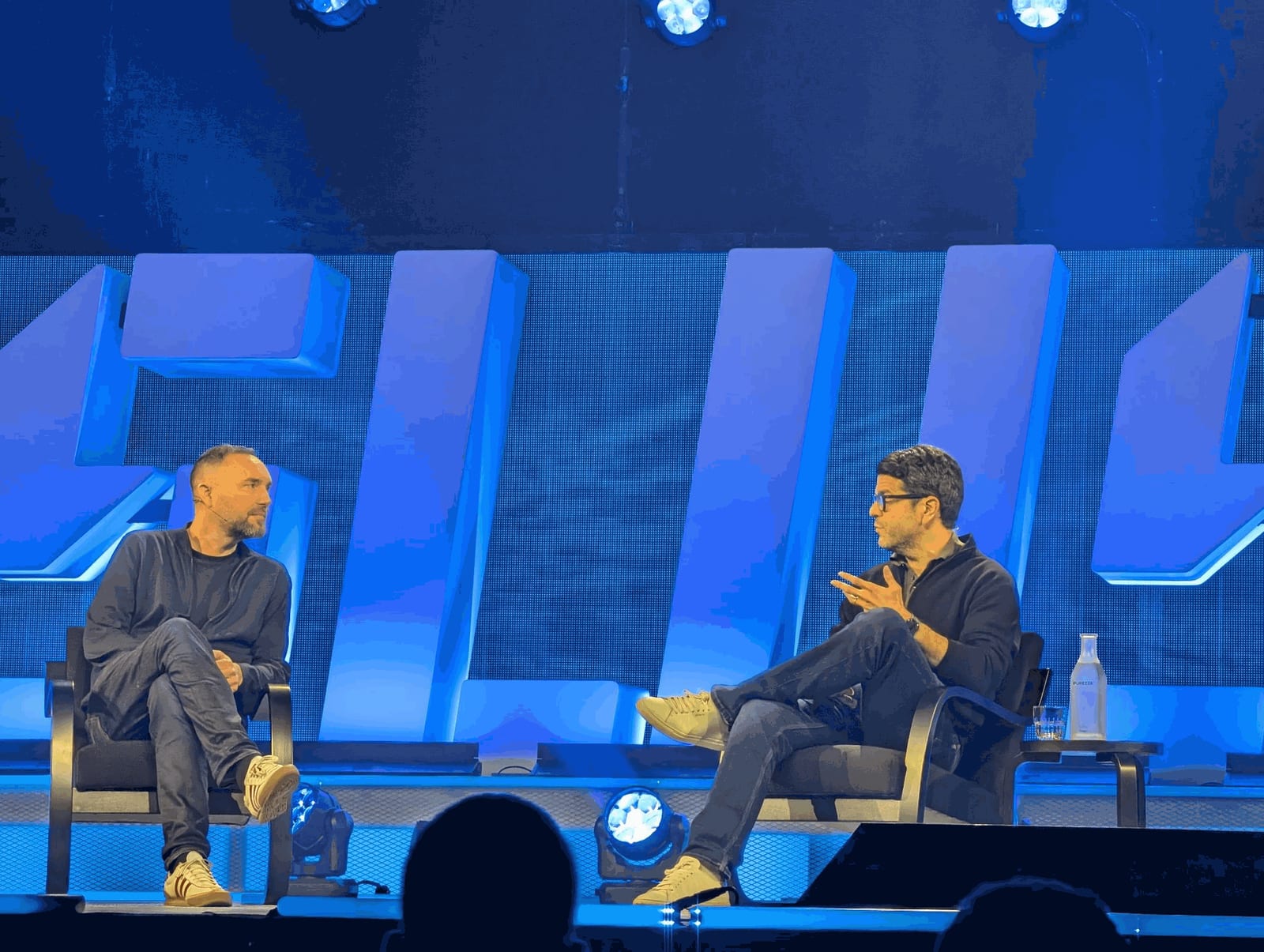
Torsten Reil (Helsing) and Khaled Helioui (Plural) in "Sovereignty Starts at the Cap Table" at Slush 2026.
That is the question Scrydon was built to answer. The platform runs in a sovereign cloud, on premise or fully air-gapped, and the customer holds the keys. Your data. Your AI. Your control.
Enterprise AI is ready to leave the pilot stage
Every large organisation we met has AI pilots. Far fewer have AI running in production, on real processes, with someone accountable for what it does. "Escaping pilot purgatory" even had its own session.
The reason is rarely the model. It is the process around it: which decisions AI should support, who owns them and what happens next.
Most processes were never written down the way they actually run. They live in handovers, in exceptions and in the experience of the people who do the work. An agent dropped into that has nothing to hold on to. It does not know when a step is done, who has to approve it or what to do when a case does not fit. So the pilot works in the demo and stalls at the first exception.
On top of that, the knowledge an agent needs sits in ten systems, in documents and in people's heads. A vessel, a customer or an incident means something different in each of them.
The teams that are moving fastest start from the process, not the data: which decisions do we want to make better, who makes them, and what do they need to see? Then they give AI that shared picture, let agents carry the load, and keep people at the gates.
That is how we build Scrydon, and the process side is where we differ most. We start from how the work really runs: the steps, the owners, the approvals and the exceptions. That becomes one model of your people, data and processes, so AI can act on it and you can prove what it did.
Defence and critical infrastructure need coordination, not more screens
European defence was everywhere at Slush this year: on stage, in new funds and in the startups pitching drones, sensors and autonomous systems. The capabilities in the field are growing fast. Robots patrol sites, satellites pass overhead, sensors flag anomalies within seconds.
What we heard from grid operators, coastguards and defence teams is that seeing more is not the bottleneck. Acting together is. A damaged cable, a drone over a substation or a vessel going dark often starts as a safety call and turns into a security event. The early signs sit with different organisations, in different systems.
In OODA terms: Europe has invested heavily in Observe, and in the individual means to Act. The weak link is what connects them. First Orient: a shared understanding across different systems and organisations, so that scattered signals become one picture. Then execution: a coordinated, recorded decision that is carried out across those same systems and across domains, from sea to land to cyber, instead of inside one organisation's own tools. Scrydon provides both, alongside the sensors, platforms and partners our customers already use.
We heard this most clearly the day before Slush, at DECOI x Borderland on 17 November. It brought together navies, defence ministries, primes, research institutes, EU institutions and defence founders for a full day on Europe's eastern flank. The message from the stage was practical: test in real conditions, and plug into NATO's shared data layer rather than building another stand-alone system.
What struck us most was the energy in the Finnish defence community. Finland is building fast, is open to European partners, and is a natural place to prove how sovereign AI supports coordinated decisions across organisations.
What's next for Scrydon
We came home from Helsinki with new partners to explore, from Nordic sovereign infrastructure to field robotics, and with a clear signal that the market is ready for a European AI operating system built for control.
In the coming weeks we follow up with everyone we met. If we spoke at Slush, or if these themes sound like your organisation, we would love to continue the conversation.
Kiitos, Helsinki. See you next year.
Prefer to write? Email hello [at] scrydon.com and we will get back to you.